Top 10 Insulation Technologies for Extreme Cold: From Down to Synthetic

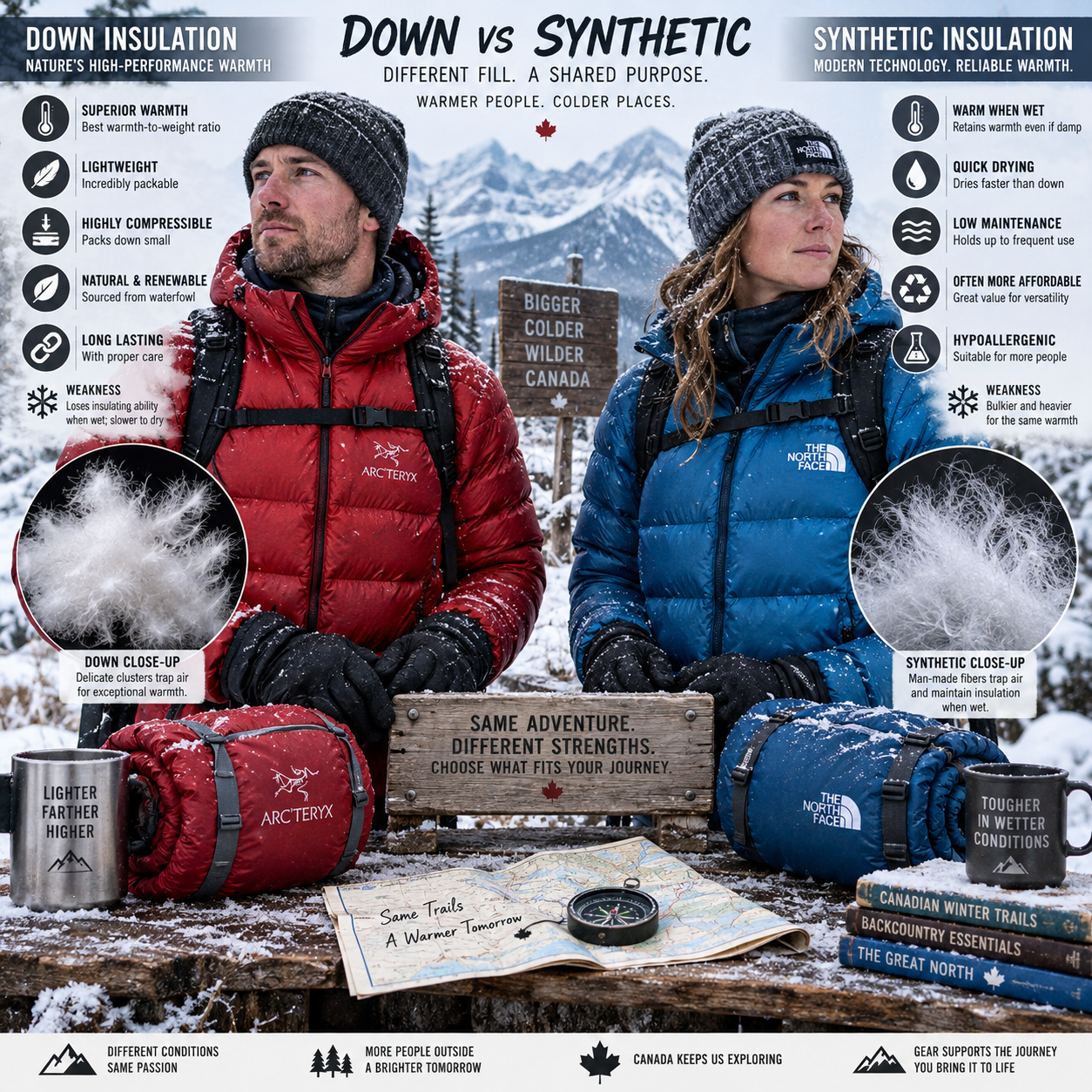
Choosing a winter jacket for Canadian winter conditions starts with its insulation, but insulation alone does not determine warmth. The amount of fill, loft, shell fabric, wind protection, fit, hood, cuffs, and layering system all influence how comfortable you feel in extreme cold.
Down remains the benchmark for warmth-to-weight and packability, while synthetic insulation offers dependable performance in damp weather and during active use. The right choice depends on where you live, how you move, and whether your typical winter day brings dry deep cold, wet snow, freezing rain, or strong wind.
What Makes an Insulation Technology Suitable for Extreme Cold?
An insulation technology suits extreme cold when it traps enough still air to slow heat loss while managing moisture, wind, weight, and movement. A warm jacket must work as a complete system rather than relying on one specification such as fill power.
Loft describes the thickness created by insulation. More loft generally creates more trapped air, which improves thermal insulation, although the result also depends on fill quantity and jacket construction. Fill power measures how much space one ounce of down occupies; higher fill power can provide excellent warmth with less weight, but it does not reveal how much down the jacket contains.
Moisture management matters because damp insulation loses efficiency. Down can collapse when soaked, while many polyester insulation products continue to provide useful warmth when wet and dry faster. A windproof outer shell, water-resistant face fabric, and properly sealed construction also prevent cold air from stripping away trapped warmth.
Finally, consider activity level. A long, generously insulated parka may suit a stationary commute or outdoor work shift, while a lighter jacket with breathable synthetic insulation may be more comfortable for snowshoeing, cycling, or other high-output activities.
Down Insulation
Down insulation provides exceptional warmth-to-weight, loft, and compressibility, making it especially effective in dry, cold conditions. Its main weakness is moisture: untreated down can lose loft and insulating performance when exposed to significant wetness.
Down clusters from duck or goose feathers create a fine network of air pockets. That structure explains why a well-designed down jacket can feel warm without becoming excessively heavy. It also packs down efficiently for travel and storage.
The two measurements to examine are fill power and fill weight. Fill power indicates the loft potential of the down, while fill weight indicates how much insulation is actually inside the jacket. A high-fill-power jacket with very little fill may be less warm than a lower-fill-power jacket with a substantially larger amount.
Down performs best when protected by a wind-resistant shell and kept reasonably dry. Look for well-distributed baffles, secure stitching, and a hood that closes around the face. Hydrophobic down adds a water-repellent treatment to the clusters, but it is not waterproof and still needs protection from prolonged rain or saturated snow.
Synthetic Insulation
Synthetic insulation uses engineered fibres, usually polyester, to retain heat and generally performs more consistently than down in damp conditions. It dries faster, handles repeated use well, and usually costs less, although it is often bulkier for an equivalent level of warmth.
Synthetic fibres are designed to maintain air-trapping spaces even when exposed to light moisture. That makes synthetic insulation a practical choice for wet snow, freezing rain, humid coastal climates, and active users who generate perspiration.
There are two broad constructions. Continuous-filament synthetic insulation uses long, interconnected fibres that resist shifting and can offer good durability. Short-staple insulation uses small fibre clusters that mimic down’s loft and drape but may require more careful quilting to prevent migration.
Choosing synthetic for moisture resistance means accepting greater bulk and, in some designs, a lower warmth-to-weight ratio. Repeated compression can also reduce loft over time, so inspect the care label and avoid storing the jacket tightly compressed for long periods.
Top 10 Insulation Technologies Compared
The top 10 insulation technologies differ mainly in warmth-to-weight, moisture resistance, packability, durability, and intended use. Use the comparison below as a starting point, then judge the jacket’s fill amount and shell construction.
- Premium high-fill-power down: Excellent warmth-to-weight and packability, with outstanding loft in dry cold. It has limited wet-weather tolerance and suits lightweight expedition-style parkas, travel, and dry inland winters.
- Standard down insulation: Provides strong warmth and comfort at a more accessible price, but generally weighs more or packs larger than premium down. It works well for everyday cold when the shell protects it from precipitation.
- Hydrophobic down: Treated down offers improved moisture resistance and may recover loft more readily after light dampness. It remains less reliable than synthetic insulation when repeatedly exposed to wet snow, rain, or heavy perspiration.
- Continuous-filament synthetic: Long polyester fibres resist shifting and can deliver durable, consistent insulation. It is a good option for outdoor work, frequent wear, and conditions where moisture is likely.
- Short-staple synthetic: Small fibres create a soft, down-like feel and can provide useful loft at a moderate price. The trade-off is usually more bulk and a greater need for effective quilting to keep the fill evenly distributed.
- Recycled polyester insulation: Recycled polyester uses recovered plastic-based fibres in a synthetic insulation system. Warmth and weather performance depend on the construction, not simply on the recycled label, so compare loft, fill amount, and baffle design.
- High-loft synthetic insulation: Extra-lofty fibres create a warm, comfortable jacket with good damp-weather resilience. This design suits cold commuters and casual winter use, though it may feel bulky under a backpack or beneath a shell.
- Hybrid down-synthetic designs: Hybrid jackets place down in low-moisture zones, such as the torso, and synthetic insulation in areas prone to sweat or wetness. They balance packability and moisture management but can cost more and require closer inspection of panel placement.
- Reflective thermal linings: Reflective layers are intended to return some radiant body heat toward the wearer. They can complement insulation, but they cannot replace adequate loft, a windproof shell, or good coverage at the hood, cuffs, and hem.
- Layered or multi-insulation systems: Multiple insulation layers combine different materials or air spaces for adaptable warmth. They can perform well across changing conditions, but added complexity may increase weight, price, and maintenance demands.
For a simple decision rule, start with moisture, then activity, then weight. Choose down when dry cold and low weight dominate; choose synthetic when wetness, durability, or high-output movement matters most.
Choosing Insulation for Different Canadian Winter Conditions
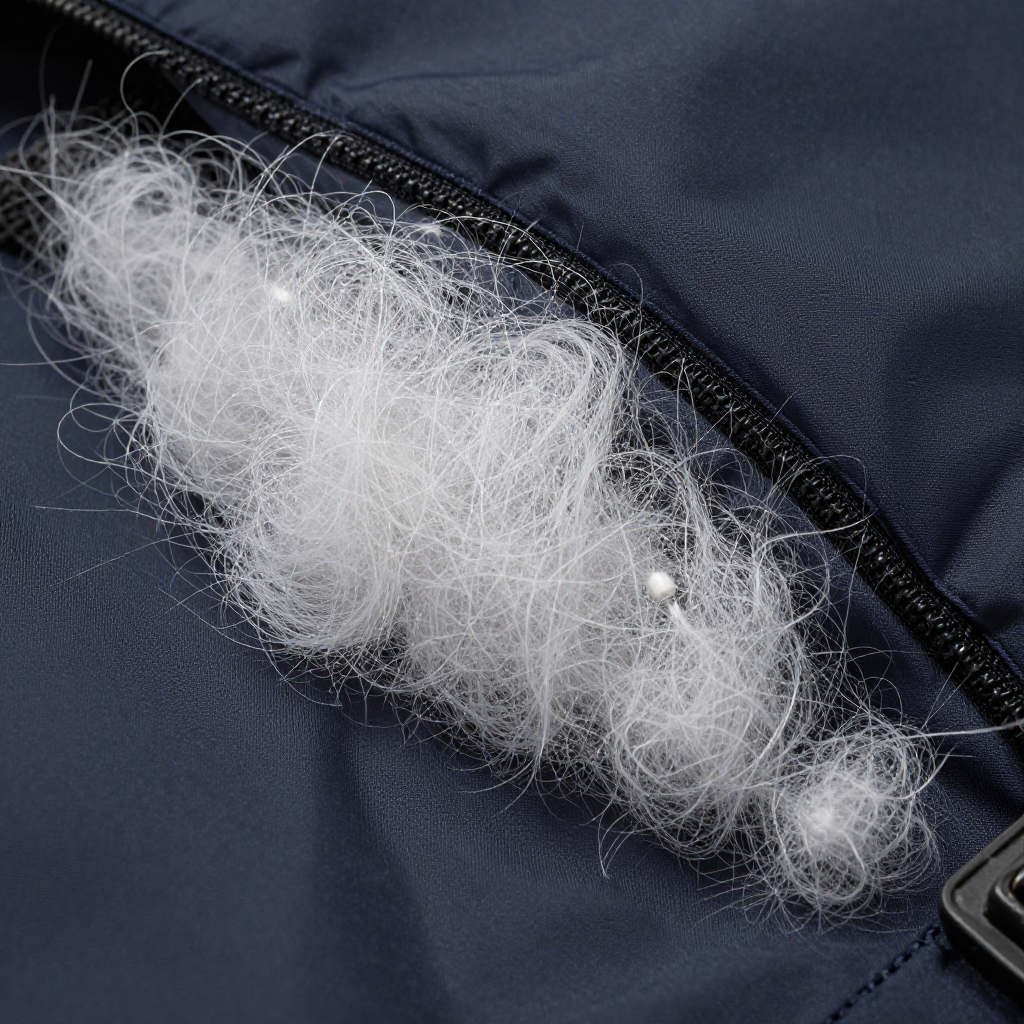
The best insulation for Canadian winter conditions depends on exposure: dry deep cold favours loft-rich down, while wet snow, freezing rain, and high activity often favour synthetic or hybrid designs.
- Dry deep cold: A substantial down parka can deliver excellent warmth with manageable weight, provided the outer shell blocks wind and occasional snow.
- Wet snow or freezing rain: Synthetic insulation offers a safer performance margin because it dries faster and continues insulating better when damp.
- High wind: Prioritize a windproof outer shell, adjustable hood, storm flap, snug cuffs, and hem control. Wind resistance can matter as much as the insulation type.
- Urban commuting: Consider jacket length, seated comfort, pocket access, and protection around the neck. A medium-to-heavy down or synthetic parka often makes more sense than an ultralight layer.
- Outdoor work: Durable synthetic insulation or a hybrid design usually handles abrasion, moisture, and repeated wear more confidently than delicate lightweight down.
- High-output activities: Use breathable synthetic insulation or a lighter layered system. Excess insulation can cause sweating, which later chills the body when activity stops.
Local weather patterns matter. A dry prairie winter, damp Atlantic storm, and windy Great Lakes season can demand different jacket priorities even at similar temperatures.
Insulation Is Only Part of a Warm Winter Jacket
Insulation is only one part of a warm winter jacket; coverage, fit, shell protection, and small construction details determine how effectively that insulation works. A lower-fill jacket with excellent wind protection can feel warmer than a loftier jacket that leaks air.
Check the jacket’s fill amount, not just its fill power. Longer parkas protect more of the torso and upper legs, while a shorter jacket may provide better mobility. A well-shaped hood should adjust around the face without blocking vision, and insulated cuffs should close over or under gloves without leaving gaps.
Look for a drawcord hem, a high collar, covered zippers, and a shell fabric suited to the expected precipitation. The fit should leave room for a base layer and mid-layer without compressing the insulation. Excess space can also allow warm air to escape, so avoid sizing up automatically.
A practical layering system usually combines a moisture-managing base layer, an optional fleece or wool mid-layer, and the insulated outer jacket. Do not add layers so tightly that they crush the loft.
How to Choose the Right Jacket at an Outlet
To choose the right winter jacket at an outlet, match the insulation and construction to your weather, activity, fit, and care capacity before comparing the discount. A low price is useful only when the jacket solves your actual winter problem.
- Define the use case: Separate daily commuting from outdoor work, travel, skiing, or high-output activity. Each requires a different balance of warmth, mobility, and moisture resistance.
- Read the insulation details: Identify down, hydrophobic down, polyester insulation, or a hybrid system. For down, check both fill power and fill amount when available.
- Inspect construction: Examine baffles, seams, zipper protection, hood adjusters, cuffs, hem drawcords, and pocket placement. Try the jacket on with the layers you normally wear.
- Test mobility: Raise your arms, sit down, turn your head, and reach into the pockets. The jacket should stay closed at the wrists, waist, and neck without restricting movement.
- Check condition and care: At an outlet, inspect for compressed fill, damaged stitching, stains, missing trims, or a damaged shell. Confirm whether the jacket can be machine washed and how down or synthetic insulation should be dried.
- Compare value: Consider warmth, materials, construction, expected use, and repairability rather than relying on the original price or discount percentage.
Common mistakes include choosing high fill power without checking fill quantity, buying down for persistently wet weather, ignoring wind protection, and selecting a fashionable slim fit that compresses the insulation. Correct those errors by evaluating the whole jacket in the order weather, activity, coverage, fit, then price.
Frequently Asked Questions
Is down warmer than synthetic insulation in extreme cold?
Down often provides greater warmth-to-weight and packability, especially in dry cold. Synthetic insulation may perform better when the jacket regularly encounters moisture, sweat, or rough daily use.
Which insulation is best for wet Canadian winters?
Synthetic insulation is usually the more dependable choice for wet Canadian winters because polyester fibres dry faster and retain useful loft better when damp. A water-resistant shell remains essential.
What does fill power mean in a winter jacket?
Fill power measures the loft of down, expressed as the volume occupied by a standard weight. It helps compare down quality, but it does not show the total amount of down or the jacket’s complete warmth.
Are synthetic insulated jackets easier to maintain?
Often, yes. Synthetic jackets generally tolerate damp use and routine washing more easily, while down requires careful washing and thorough drying to restore loft. Always follow the garment’s care label.
How should an insulated winter jacket be layered and cared for?
Wear a moisture-managing base layer, add a breathable mid-layer when needed, and avoid compressing the jacket’s insulation. Store it uncompressed, keep the shell clean, and dry damp insulation promptly according to the manufacturer’s instructions.