How to Properly Care for and Maintain Your Technical Winter Coat

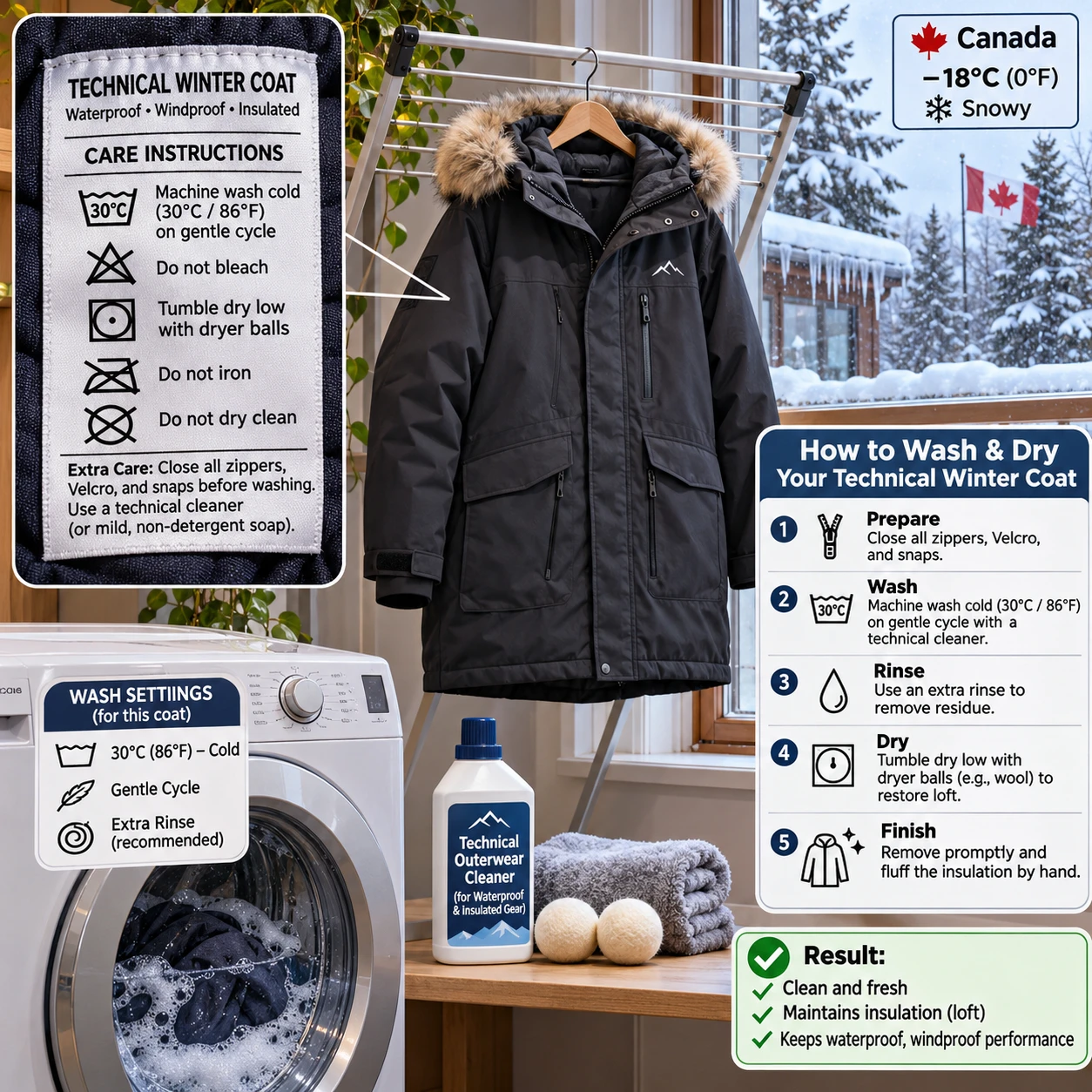
A technical winter coat is built to handle cold, wind, snow, and wet weather, but its insulation and weather-resistant features need the right care. Washing too aggressively, using the wrong detergent, or putting it away damp can affect warmth and performance.
The safest routine starts with the care label. Then match your cleaning and drying method to the coat’s insulation and shell, whether it uses down, synthetic fill, or a waterproof-breathable membrane. These steps help keep a coat comfortable through many Canadian winters without promising to reverse wear that needs repair.
Check the care label and identify your coat’s materials
Check the care label first, then identify the insulation and shell fabric before cleaning your technical winter coat. The manufacturer’s instructions take priority because fabrics, membranes, trims, and finishes can have different limits.
Look for washing temperature, cycle, detergent, drying instructions, and any warnings about bleach, ironing, or dry cleaning. If the label is missing or unclear, check the manufacturer’s care guidance for the specific model rather than guessing.
- Down insulation uses clusters of down to trap warmth. It can lose loft when wet or left clumped, so thorough drying and careful redistribution matter.
- Synthetic insulation generally handles damp conditions better and may dry faster, but heat and rough handling can still damage the fill or outer fabric.
- A waterproof-breathable membrane helps block outside moisture while allowing some water vapour to escape. Oils, dirt, and detergent residue can interfere with how the outer fabric performs.
A durable water repellent, or DWR, is usually applied to the outside face fabric. It helps water bead and roll off; it is separate from the waterproof membrane beneath it. Knowing which feature is affected helps you choose the right fix.
Prepare your coat before washing
Before washing, empty every pocket, close zippers and fasteners, and remove detachable parts as directed on the care label. This preparation helps prevent snags, uneven wear, and damage to closures.
Check the pockets for tissues, receipts, grit, or small items, then brush away loose dirt. Close the main zipper and pocket zippers, secure snaps and hook-and-loop tabs, and loosen drawcords if the instructions recommend it. Fasteners left open can catch on fabric or strike the drum during a machine wash.
Detach a removable hood, faux-fur trim, belt, or liner only if the manufacturer says it should be washed separately. Keep track of small parts and follow their individual care instructions. If there is a detachable powder skirt or similar feature, check that it is secured or removed as specified.
For a small mark, try spot cleaning before washing the entire coat. Dab the area with a clean cloth and a little care-label-approved cleaner, working gently rather than scrubbing hard. Test a hidden area first if you are unsure how the fabric will react.
Wash gently with suitable products
Wash a technical winter coat only when the care label permits it, using the gentlest approved cycle and a suitable detergent. A full wash is useful when dirt, body oils, or residue have built up; spot cleaning may be enough for a small, isolated stain.
Use a technical detergent made for outdoor clothing when the manufacturer recommends one, or another mild product explicitly permitted by the care label. Measure carefully. Too much detergent can leave residue that affects breathability or water beading, so an extra rinse can help if the label allows it.
- Use the temperature and cycle stated on the label. Do not assume every technical coat can be machine-washed.
- Wash the coat alone or with similar lightweight items if the care instructions allow. Avoid overloading the washer.
- Skip fabric softener, bleach, and ordinary stain removers unless the manufacturer specifically approves them. These products can leave deposits or harm finishes and materials.
If the coat has heavy grime or an unfamiliar construction, contact the manufacturer or a qualified cleaner before washing. Dry cleaning is not automatically safer; some coats and coatings are not designed for it.
Dry it thoroughly and restore its shape
Dry the coat according to its care label, and make sure it is completely dry before wearing or storing it. The right method depends on the insulation and fabric; damp fill can clump, smell musty, or lose its loft.
Some coats can be tumble-dried on a low setting, while others require air drying. Check before applying heat. For down, a permitted low-heat tumble dry may help restore loft; clean dryer balls can help separate clumps, but use them only if the label allows. Pause periodically to check the coat and gently break up any remaining clumps by hand.
For air drying, hang the coat on a sturdy hanger in a well-ventilated space, away from direct heat. Turn or reposition it as needed so the lining, pockets, cuffs, and insulation dry evenly. Avoid radiators, open flames, and high-heat appliances, which can damage fabric or trim.
Synthetic insulation may dry more quickly than down, but do not rely on the surface feeling dry. Check thicker panels, seams, and pockets. Once dry, gently shake the coat and smooth its shape; if fill remains uneven, follow the manufacturer’s advice rather than pulling or stretching the fabric.
Maintain water repellency and address minor damage
If water stops beading on the outer fabric, clean the coat first and consider a care-label-approved DWR treatment. Reduced beading can signal that the finish needs attention, but it does not by itself prove that the waterproof-breathable membrane has failed.
After washing, observe the fabric in light rain or with a few drops of water. If the face fabric absorbs water instead of shedding it, dirt or wear may be affecting the DWR. Follow the manufacturer’s instructions for any spray-on or wash-in treatment, including whether heat is needed to activate it. A treatment can improve surface water repellency, but it cannot guarantee a like-new result or repair a damaged membrane.
Inspect the coat for loose threads, peeling seam tape, damaged zipper teeth, and small tears. Address a minor tear promptly with a repair patch designed for technical fabric, following its instructions. Avoid household glue or improvised heat patches unless the manufacturer approves them; they can make a later professional repair harder.
For a failed zipper, a tear near a seam, or leaking seam tape, contact the brand or a repair service familiar with technical outerwear. A timely repair may prevent a small problem from spreading, while DIY fixes can compromise the waterproofing if they are not compatible with the shell.
Store and maintain your coat between winters
Before storing a technical winter coat, clean it when needed and dry it completely. Keep it in a cool, dry place with enough room to hang or rest without prolonged compression.
For long-term storage, hang the coat on a broad hanger or store it loosely in a breathable space, following the manufacturer’s guidance. Avoid leaving down or synthetic insulation compressed in a stuff sack or tightly packed bin for months. Compression is useful for short trips, but prolonged pressure can affect loft and shape.
Keep the coat away from damp basements, direct sunlight, and heat sources. Before the next Canadian winter, check zippers and closures, inspect seams and fabric, and confirm the coat is clean and dry. If it needs a wash or DWR refresh, allow enough time for the full cleaning and drying process before the first cold snap.
Frequently asked questions
Care labels provide the final answer for a particular coat, but these general points address common questions about washing, repellency, drying, and off-season storage.
Can I machine-wash a technical winter coat?
Often, but not always. Machine-wash only if the care label permits it, and use the specified temperature and gentle cycle. If the label advises against machine washing, follow that instruction or ask the manufacturer for a safe alternative.
Should I use fabric softener on a waterproof jacket?
No, unless the manufacturer explicitly permits it. Fabric softener can leave residue on the shell and may affect the DWR finish or breathability. Use a suitable detergent and rinse as directed.
How do I restore water repellency?
Wash the coat as directed, then check whether water beads on the face fabric. If it still absorbs water, apply a DWR treatment approved for that coat and follow the product and manufacturer’s instructions. Results vary with fabric condition and wear.
How should I dry a down or synthetic-insulated coat?
Follow the care label. Some coats can be tumble-dried on low; others need air drying. Down requires particular attention to complete drying and clumps, while synthetic fill can still be harmed by excessive heat.
How should I store my coat in the off-season?
Store it clean and completely dry in a cool, dry place. Hang it or leave it loosely stored, and avoid compressing the insulation for long periods.