Winter Jacket Features Decoded: Fill Power, Waterproof Ratings & Breathability

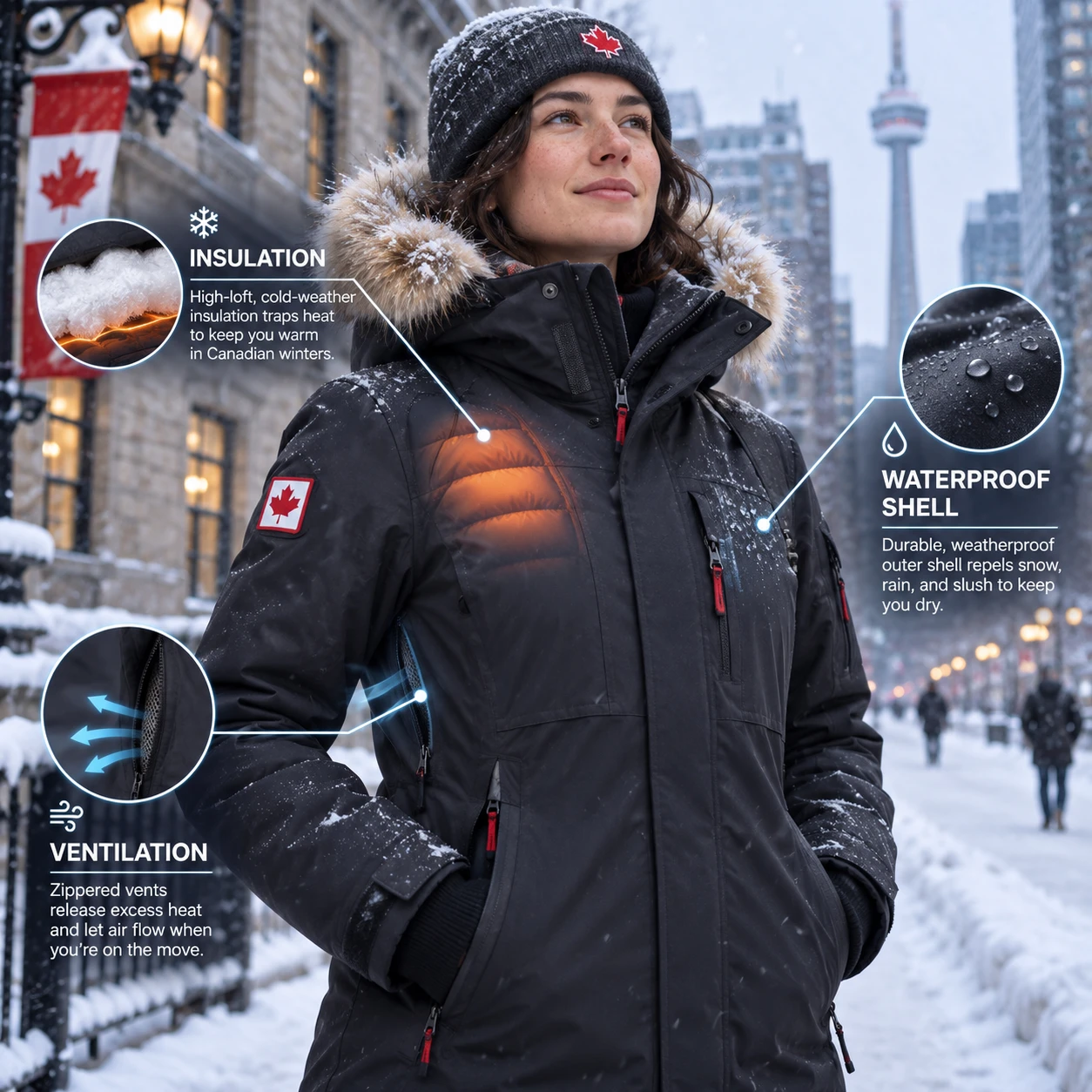
Shopping for a winter jacket can mean sorting through numbers that sound precise but do not tell the whole story. Fill power, waterproof ratings and breathability each describe a different part of performance, and none can guarantee that a jacket will feel warm or comfortable in every Canadian winter.
The useful question is how those specifications work together for your local weather and routine. A jacket for standing at a cold bus stop has different priorities from one worn on a wet coastal walk or a fast snowshoe outing.
What winter jacket specifications actually tell you
Winter jacket specifications help you compare insulation and weather protection, but they cannot replace a look at fit, construction and intended use. Treat ratings as clues about performance, then check how the jacket is built and whether it suits your conditions.
A label might list fill power, a waterproof rating, or a breathability figure. These measurements describe particular properties under particular testing methods; they do not provide a single overall score for warmth or quality. Two jackets with similar numbers can feel different because of their length, hood, cuffs, lining, seam construction and room for layers.
Start with the conditions you actually face. Is your winter mostly dry and cold, or does it bring wet snow, freezing rain and slush? Do you spend hours outside, or move between a heated car, transit and indoor spaces? Your answers help you interpret the specs instead of buying the biggest numbers on the tag.
- Fit and coverage: Check that the hem, sleeves and hood protect the areas you want covered.
- Construction: Look for details such as sealed seams, storm flaps and adjustable cuffs when wet weather protection matters.
- Use: Consider whether the jacket is designed for everyday wear, low-output cold-weather use or active movement.
Ratings are most useful as a comparison tool between jackets with similar designs. They are not a substitute for checking the product label and construction details.
Fill power and insulation: warmth without the guesswork
Fill power measures how much space a given weight of down occupies, not the total warmth of a jacket. To judge warmth, consider fill power alongside the amount and placement of insulation, jacket design and the layers you plan to wear.
Down insulation traps air in its clusters, creating warmth with relatively low weight and good compressibility. A higher fill power means the down can loft more for its weight. But a jacket with high-fill-power down is not automatically warmer than one with a lower rating: it may contain less down overall, or have a shorter cut and less coverage.
Synthetic insulation uses manufactured fibers to retain heat. It is often a practical choice in damp conditions because it can keep insulating when moisture is present better than down, although performance varies by insulation type and construction. Synthetic jackets may also be bulkier or heavier for a similar warmth-to-weight target. Down often excels when low weight and packability matter, but it needs care to avoid getting wet and losing loft.
Compare the full garment rather than selecting by fill power alone. Check whether the label identifies down fill power and fill weight, and look for how insulation is distributed. Baffles, quilting and insulated panels affect whether warmth stays even across the body. A well-fitting jacket that blocks drafts can feel warmer than a more heavily insulated one with gaps at the neck or cuffs.
Layering changes the equation. A base layer that manages moisture, a warm midlayer and an outer jacket can be more adaptable than one very heavy coat, especially when you move between outdoors and heated spaces. The trade-off is that multiple layers require enough room in the jacket to avoid restricting movement.
Waterproof ratings: what the numbers mean
A waterproof rating estimates how well a fabric resists water pressure, commonly expressed as a hydrostatic head measurement. A higher number generally indicates greater resistance in the test, but real-world protection also depends on seams, zippers, fabric condition and design.
Hydrostatic head refers to the height of a column of water a fabric can withstand before water passes through it in a standardized test. For a shopper, the number offers a useful comparison, not a promise that a jacket will stay dry in every storm. Wind-driven rain, prolonged exposure, pressure from a backpack strap and wear can all affect performance.
Wet snow and freezing rain can expose weak points that a quick walk in dry snow will not. For regular exposure to rain or slushy conditions, check whether seams are sealed or taped, and whether the front closure has a storm flap or water-resistant design. A waterproof membrane or coating can help, but gaps around stitching and openings still matter.
A DWR (durable water repellent) finish helps water bead and roll off the outer fabric. It is not the same as a waterproof membrane: DWR treats the surface, while the membrane or coated fabric provides another layer of water resistance. DWR can wear down with use and washing, so follow the care label and reapply a compatible treatment if the manufacturer recommends it.
For technical background on how water-resistant clothing is tested, the International Organization for Standardization’s ISO 811 standard describes a method for determining resistance to water penetration under hydrostatic pressure. A test method can clarify what a rating measures, but it does not predict every weather scenario.
Breathability and staying comfortable
Breathability describes how readily water vapour from perspiration can escape through a jacket. It matters most when you generate heat through movement, and it works alongside moisture-wicking layers and ventilation to help manage dampness inside the garment.
During a brisk walk, snow clearing or cross-country skiing, your body produces moisture even in cold air. If sweat builds up inside the jacket, clothing can feel clammy; once you stop moving, damp layers may make it harder to stay comfortable. A breathable shell can help reduce that buildup, but no fabric removes moisture instantly in every condition.
A breathability rating may be shown as a moisture-vapour transmission rate or another test measure. Testing methods differ, so compare figures cautiously and look for clear product information. Practical features matter too: underarm zips, front vents and adjustable openings let you release heat when you work harder, then close them when wind or snow picks up.
Moisture-wicking base layers move sweat away from the skin, while the jacket’s breathability and vents help it escape. These systems work together. A thick cotton layer that stays damp can undermine a breathable shell, and closing every vent during strenuous activity can leave moisture trapped inside.
There is a trade-off: a jacket built for high weather protection may feel less airy than a light, highly ventilated shell. For a short commute, that may not matter. For sustained activity, ventilation and adjustable layers can be more useful than choosing a jacket by one breathability number alone.
Match jacket features to your winter routine
The right winter jacket features depend on how long you are outside, how hard you move and whether your local winter is dry, wet or changeable. Choose priorities for your routine rather than assuming one jacket suits every Canadian climate and activity.
Commuting and everyday wear
For transit stops and errands, look for coverage, a comfortable hood, secure closures and enough insulation for periods of standing still. If your route includes wet snow or rain, prioritize reliable shell protection and construction around seams and zippers. A very breathable, lightweight jacket may be less important if you move gently and spend much of the day indoors.
Casual wear in cold, dry conditions
In dry cold, insulation and wind protection may matter more than a high waterproof rating. Down can provide warmth with less bulk, while synthetic insulation may suit you if you want easier care or expect occasional dampness. Check the fit over the midlayer you actually wear rather than relying on the size label alone.
Active outdoor use
For hiking, snowshoeing or other sustained movement, consider breathability, vents and a shell that protects against the precipitation you expect. A lighter insulated jacket or a layering system can adapt as your effort changes. If you stop often or spend long periods in exposed cold, you may need more insulation than an activity-focused jacket provides.
Coastal rain, Prairie wind, northern cold and changing urban conditions place different demands on outerwear. A useful decision rule is: match insulation to how still you are, waterproofing to how wet it gets, and breathability to how hard you move.
A practical checklist before you buy
Before buying a winter jacket, compare the insulation, water protection, breathability, fit and care instructions against your routine. Check the full product label and construction details; no single rating tells you whether the jacket is right for your Canadian winter.
- Insulation: Is it down or synthetic? If down, what is the fill power, and does the label give the amount of fill?
- Weather protection: Is the jacket water-resistant or waterproof? Is a hydrostatic head rating provided, and are seams sealed where needed?
- Surface finish: Does it have a DWR finish, and what does the care label say about maintaining it?
- Breathability: Is a rating provided? Are there vents or adjustable openings for active use?
- Fit and layering: Can you raise your arms, sit comfortably and wear your usual base and midlayers without tightness?
- Routine: Will you mostly commute, walk casually, or exercise outdoors? What precipitation and wind do you commonly face?
Watch for three common buying mistakes. First, choosing a jacket by fill power alone can lead to a coat that is less warm than expected if it has little fill or limited coverage. Compare the whole garment. Second, assuming water-resistant means waterproof can leave you damp in prolonged rain; check the rating and seam details. Third, choosing maximum insulation for every use can make active outings uncomfortable. Consider movement, ventilation and layering before deciding.
Frequently asked questions
Does higher fill power always mean a warmer jacket? No. It describes the loft of down relative to its weight. Total warmth also depends on how much insulation the jacket contains, its design and its fit.
Is a water-resistant jacket the same as a waterproof one? No. Water resistance may handle light precipitation or brief exposure, while waterproof construction is intended to resist water more strongly. Ratings, seams and closures help clarify the difference.
What matters more for everyday winter wear: waterproofness or breathability? It depends on your weather and pace. In wet, slushy conditions, waterproof protection may take priority; for brisk walking or active use, breathability and vents help manage perspiration.
Is down or synthetic insulation better for damp conditions? Synthetic insulation often retains useful warmth better when damp, while down offers strong warmth for its weight when kept dry. Check the jacket’s construction and care guidance, since results vary by product.
Read the specifications as a set, then test the jacket’s fit with the layers you plan to wear. The best choice is the one whose insulation, weather protection and ventilation match your actual routine, not simply the one with the most impressive number on its tag.